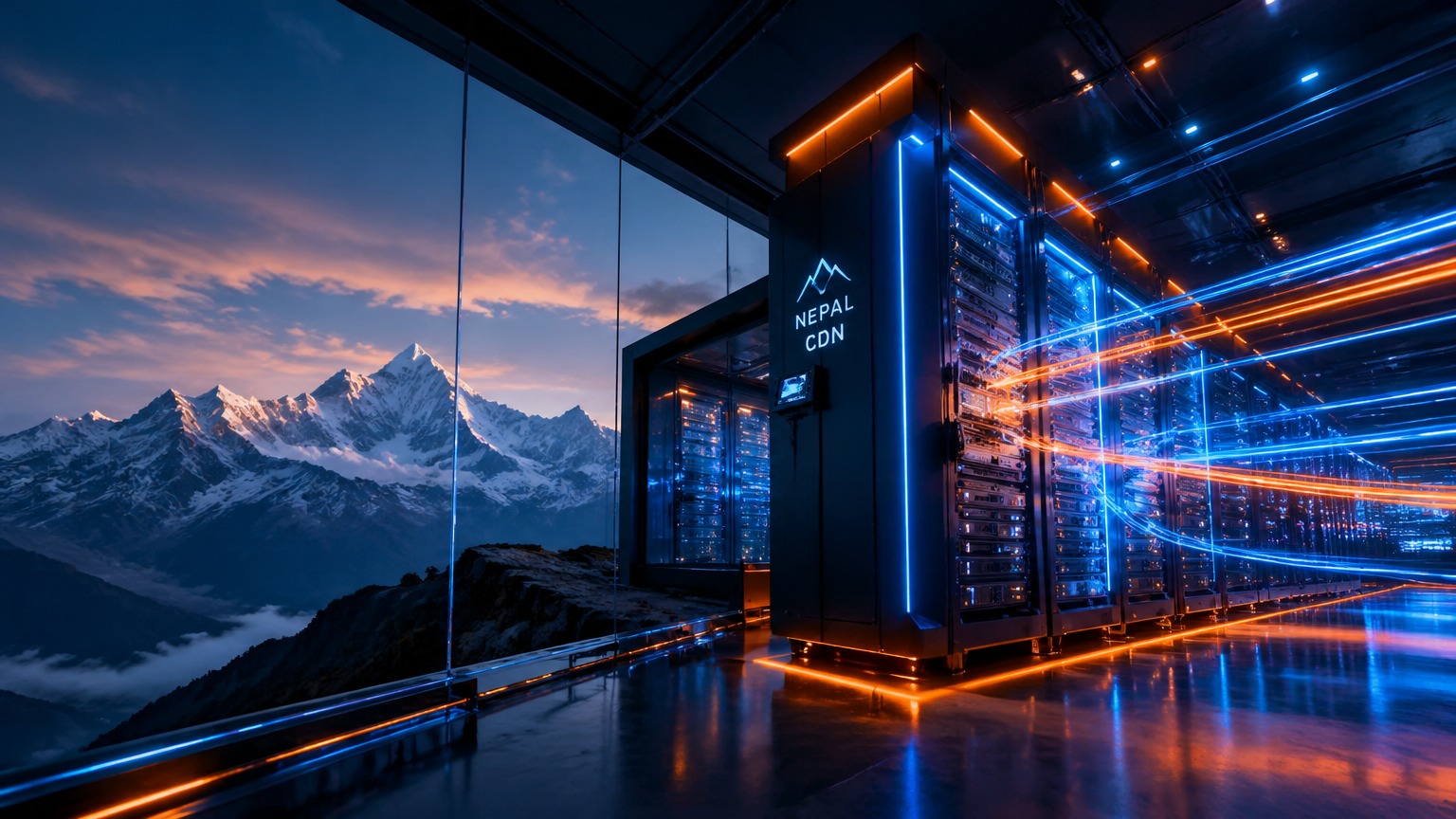

- AI has changed what websites do — and AI has also changed how attackers compromise them.
- In 2026, AI-powered malware can evade signature-based scanners, auto-generate SEO spam injections, and scale attacks faster than human response.
- Your next server in Nepal needs AI defenses and elastic scaling to match.
The hosting industry in 2026 is in a fundamental arms race. AI tools have lowered the barrier for web development — they have also lowered the barrier for automated attacks, AI-generated spam injections, and sophisticated phishing infrastructure hosted on compromised servers. For Nepali businesses building real digital assets, "AI-ready hosting" is no longer a marketing slogan. It is a specific technical requirement.
How AI Has Changed the Web Hosting Security Landscape
Three AI-driven attack patterns now dominate web hosting security incidents in 2026:
1. AI-Generated SEO Spam Injections
Attackers compromise WordPress sites and use generative AI to inject thousands of contextually relevant spam pages — gambling, pharmacy, or adult content — that look legitimate to both users and basic scanners. These injected pages can earn high rankings in days, silently destroying your site's trust signals with Google.
2. AI-Powered Brute Force
Traditional brute force attacks use dictionaries of common passwords. AI-powered attacks generate contextually personalized password guesses based on your domain name, company name, and publicly available data — dramatically increasing success rates against weak passwords.
3. Zero-Day Exploit Automation
When a new WordPress plugin vulnerability is disclosed, AI tools can automatically scan millions of sites for vulnerable versions and deploy exploit payloads within hours — before most users have even read the security notice. A host without real-time behavioral detection has no defense against this.
What AI-Ready Malware Detection Actually Means
Imunify360: The Standard for 2026
WebsNP deploys Imunify360 across all hosting plans — the industry's leading AI-powered server security suite. What it does:
- Behavioral analysis: Detects malicious activity by analyzing what code is doing, not just matching known signatures. A zero-day malware that has never been seen before can still be caught by its behavior.
- Real-time file scanning: Every file upload and modification is scanned instantly — not in scheduled overnight scans that give attackers a 12-hour window.
- Proactive Defense: Learns from global attack patterns across all Imunify360 deployments and updates defenses in real-time across all protected servers.
- Automatic cleanup: Detected malware is quarantined and cleaned automatically — no waiting for a human to notice a support ticket.
- Web Application Firewall (WAF): Blocks malicious requests at the edge before they reach PHP or MySQL.
The Difference Between Imunify360 and a Basic Antivirus
| Feature | Basic Antivirus (ClamAV) | Imunify360 (AI-powered) |
|---|---|---|
| Detection method | Signature matching only | Behavioral AI + signatures |
| Zero-day protection | ❌ None | ✅ Behavioral detection |
| Real-time scanning | ❌ Scheduled only | ✅ Instant on file change |
| Automatic cleanup | ❌ Manual | ✅ Automated quarantine |
| WAF integration | ❌ | ✅ OWASP rule-based WAF |
| Global threat intel | ❌ | ✅ Real-time from cloud |
Auto-Scaling: Why Traffic Spikes Should Not Mean Downtime
In Nepal, traffic patterns are highly irregular. A news site can go from 500 to 50,000 simultaneous visitors in minutes when a story breaks on social media. A fashion e-commerce store can see 20× normal traffic during Dashain and Tihar sales. Traditional fixed-resource hosting has a hard ceiling — exceed it and your site goes down exactly when you need it most.
How Auto-Scaling Works
Auto-scaling (also called elastic hosting) automatically provisions additional server resources when demand spikes and releases them when traffic normalizes — so you pay only for what you use, and you never hit a ceiling.
Implementation levels:
- Vertical scaling: Temporarily increasing CPU/RAM on your existing server instance. Faster but has limits.
- Horizontal scaling: Adding additional server instances behind a load balancer. Effectively limitless but requires application architecture support.
- PHP worker auto-scaling: WebsNP dynamically allocates additional PHP workers during traffic spikes — preventing request queuing without full server provisioning overhead.
Practical Auto-Scaling for Nepali Businesses
For most Nepali websites (WordPress, WooCommerce, custom Laravel apps), the following combination provides effective scaling without enterprise complexity:
- LiteSpeed full-page cache absorbs the majority of traffic spikes (cached pages require zero PHP/database resources)
- Cloudflare in front absorbs DDoS and serves edge-cached static assets
- Redis caching reduces database load for dynamic pages
- WebsNP's dynamic PHP worker allocation handles remaining dynamic traffic
This stack can serve 10,000 concurrent visitors on a mid-tier plan that normally handles 500 — because 95% of those visitors are served cached content without touching the application layer.
The AI-Ready Hosting Checklist for 2026
| Requirement | What to Look For | WebsNP |
|---|---|---|
| AI malware detection | Imunify360 or equivalent | ✅ Included on all plans |
| Real-time file scanning | On-access scanning, not scheduled | ✅ Imunify360 |
| Web Application Firewall | OWASP ModSecurity rules | ✅ Active on all plans |
| DDoS protection | Network-level, not just firewall | ✅ Network-level DDoS mitigation |
| PHP worker scaling | Dynamic allocation on demand | ✅ LiteSpeed LSAPI |
| Full-page caching | LiteSpeed or Varnish | ✅ LiteSpeed Enterprise |
| CDN-ready | Cloudflare integration | ✅ One-click Cloudflare |
| HTTP/3 support | QUIC protocol | ✅ Enabled by default |
| Automated backups | Daily, 30-day retention, offsite | ✅ Included |
| Local support | Nepal timezone, native language | ✅ 24/7 Nepali team |
Future-Proofing Your Infrastructure
In the next 12–24 months, the following will become standard requirements for any serious website in Nepal:
- AI-assisted log analysis: Automatically detecting unusual access patterns that precede attacks
- Predictive auto-scaling: Scaling before traffic arrives based on social media trend detection
- LLM API gateway caching: Caching AI-generated content responses to avoid redundant API costs
- Edge computing at Nepal ISP level: Sub-5ms response times for static content
WebsNP's infrastructure roadmap is aligned with these developments. Our enterprise clients already have access to beta features in our advanced hosting tiers.
The websites that survive and dominate Nepal's next phase of digital growth will be the ones built on infrastructure that matches the sophistication of the attacks they face and the ambitions of the audiences they serve. AI-ready hosting is not a premium feature — it is the new baseline.
Move your site to AI-ready infrastructure today. Explore WebsNP hosting plans — Imunify360 security, LiteSpeed Enterprise, and local Nepal DC are included on every plan, not sold as extras. Or talk to our team about custom scaling architecture for high-traffic applications.