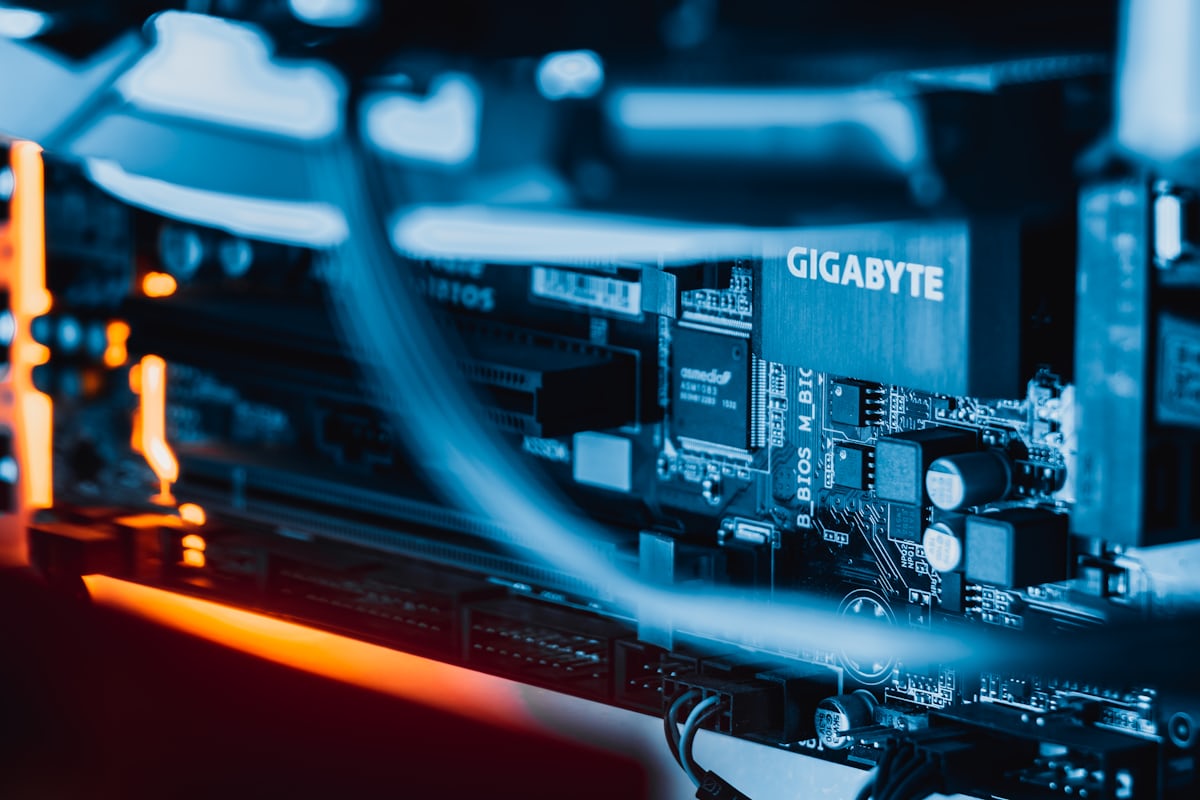
- GPU dedicated servers now span everything from a single RTX 4090 for hobbyist inference to 8x H200 clusters for foundation model training.
- This guide covers real GPU specs, VRAM requirements, and pricing for AI, rendering, and ML workloads in 2026.
Renting a GPU dedicated server in 2026 means choosing across a much wider spread of hardware than it did even two years ago, a single consumer RTX 4090 is enough for many inference and rendering jobs, while training a modern language model from scratch needs multiple data-center-class H100 or H200 cards with NVLink interconnects. Picking the wrong tier either wastes budget on VRAM and interconnect bandwidth you will never use, or leaves your training job swapping to system RAM and crawling. This guide breaks down what GPU tier actually fits AI training, inference, and rendering workloads, with real specs and current pricing.
GPU Tiers and What They Are Actually For
| GPU | VRAM | FP16/BF16 Compute | Best For | Typical Monthly Rental |
|---|---|---|---|---|
| NVIDIA RTX 4090 | 24 GB GDDR6X | ~330 TFLOPS (with sparsity) | Inference, small-model fine-tuning, rendering | $220-$380 |
| NVIDIA RTX A6000 Ada | 48 GB GDDR6 | ~366 TFLOPS (with sparsity) | Larger model inference, professional 3D rendering | $380-$550 |
| NVIDIA L40S | 48 GB GDDR6 | ~733 TFLOPS (with sparsity) | Mixed inference/training, video encoding at scale | $600-$900 |
| NVIDIA A100 80GB | 80 GB HBM2e | ~624 TFLOPS (with sparsity) | Mid-size model training, multi-GPU fine-tuning | $1,200-$1,800 (single GPU) |
| NVIDIA H100 SXM | 80 GB HBM3 | ~1,979 TFLOPS (with sparsity) | Large-scale training, foundation model work | $2,200-$3,200 (single GPU) |
| NVIDIA H200 | 141 GB HBM3e | ~1,979 TFLOPS (with sparsity) | Large context windows, memory-bound LLM training | $2,800-$4,000 (single GPU) |
Multi-GPU chassis (4x or 8x configurations with NVLink or NVSwitch interconnects) scale roughly linearly on price but not always linearly on realized performance for training jobs, since interconnect bandwidth between GPUs becomes the new bottleneck once you cross 4+ cards on a single training job, this is why 8x H100 SXM boxes with full NVSwitch fabric command a significant premium over 8x PCIe-connected cards with no direct GPU-to-GPU interconnect.
Renting GPU Servers by Region: Latency and Data Residency
GPU-heavy workloads often move large volumes of data between storage, the GPU host, and end users, which makes region selection matter more than it does for a typical low-bandwidth web application. For inference APIs serving end users directly, picking a GPU server region close to your user base meaningfully reduces round-trip latency for real-time applications like chatbots or live image generation. For training workloads, region matters less for latency but can matter a great deal for data residency and compliance requirements, some industries and jurisdictions require training data (especially anything containing personal information) to remain within specific geographic or regulatory boundaries, which can narrow your provider and region choices before VRAM or GPU model even enters the conversation.
Matching VRAM to Your Actual Workload
LLM Inference
A quantized 7B parameter model (4-bit quantization) needs roughly 5-6 GB of VRAM just to load the weights, leaving room on a single RTX 4090's 24 GB for a reasonable context window and batch size. A 70B parameter model at 4-bit quantization needs around 38-42 GB, which fits on a single A6000 Ada or L40S but is tight; running it at higher precision (8-bit) pushes you toward an 80 GB A100 or H100. Unquantized 70B+ models in FP16 generally require multi-GPU setups regardless of which card you choose.
Fine-Tuning
Fine-tuning adds optimizer state and gradient memory on top of model weights, a rough rule of thumb is 3-4x the inference VRAM requirement for full fine-tuning, though parameter-efficient methods like LoRA and QLoRA cut this dramatically, often letting you fine-tune a 13B model on a single 24 GB RTX 4090 using 4-bit quantized base weights plus LoRA adapters.
Training From Scratch
Training a model from scratch at any meaningful scale (even a few hundred million to low billions of parameters) needs multiple data-center GPUs with high-bandwidth interconnects, this is squarely H100/H200 territory with NVLink, not a task for consumer cards regardless of how many you cluster, because the frequent all-reduce gradient synchronization steps saturate PCIe-only interconnects and stall the whole training loop.
3D Rendering and Video Workloads
Offline rendering (Blender Cycles, Octane, V-Ray GPU) benefits from raw CUDA core count and VRAM capacity to hold large scene textures, making the RTX 4090 or A6000 Ada excellent value, professional studios doing feature-length production work often prefer the A6000 Ada's 48 GB for headroom on complex scenes with 8K textures, while the 4090 is frequently the better price-per-frame choice for freelancers and smaller studios.
Software Stack and Container Runtime Considerations
Beyond raw hardware, GPU server usability hinges on driver and CUDA toolkit version alignment with your ML framework. PyTorch and TensorFlow releases typically pin to specific CUDA toolkit version ranges, and running a mismatched driver can silently fall back to CPU execution or throw cryptic initialization errors rather than a clear version-mismatch message. Confirm the provider's base image includes a driver version compatible with your framework's required CUDA version before provisioning, and check whether the provider supports the NVIDIA Container Toolkit for Docker, since most modern ML pipelines containerize their training and inference environments rather than installing dependencies directly on the host OS. For multi-tenant GPU sharing scenarios (less common on true dedicated servers but relevant if you are considering fractional GPU rental), confirm whether NVIDIA MIG (Multi-Instance GPU) partitioning is supported on data-center cards like the H100, which lets a single physical GPU be split into isolated instances with guaranteed VRAM and compute allocations.
Pricing Structures: Hourly, Monthly, and Reserved
Unlike a typical web-hosting dedicated server, GPU servers in 2026 are commonly billed three different ways, and the right choice depends heavily on your usage pattern.
| Billing Model | Best For | Typical Rate (single H100) |
|---|---|---|
| Hourly/on-demand | Bursty experimentation, short training runs | $2.50-$4.50/hour |
| Monthly dedicated | Continuous inference services, ongoing fine-tuning | $2,200-$3,200/month |
| Reserved (6-12 month) | Production workloads with predictable, sustained load | 15-30% discount off monthly rate |
A rough breakeven: if you expect to use a GPU more than roughly 300-350 hours per month (about 45-48% utilization), a monthly dedicated plan is usually cheaper than hourly on-demand billing. Below that utilization threshold, hourly billing avoids paying for idle capacity.
CPU, RAM, and Storage Pairing Matters Too
A common mistake is over-indexing on the GPU spec sheet while under-provisioning everything around it. Data loading and preprocessing for training pipelines is CPU and I/O bound, pair a single H100 or H200 with at least a 16-32 core host CPU (AMD EPYC or Intel Xeon Gold class) and NVMe storage capable of sustained sequential reads above 3-4 GB/s, otherwise the GPU sits idle waiting on the data pipeline. RAM should generally be at least 2x the total VRAM across all GPUs in the box to comfortably stage datasets and checkpoints without excessive disk swapping.
Multi-GPU Interconnect: PCIe vs NVLink vs NVSwitch
| Interconnect | Typical Bandwidth (bidirectional) | Best For |
|---|---|---|
| PCIe Gen4 x16 (GPU-to-GPU via host) | ~64 GB/s | Independent inference workloads, embarrassingly parallel rendering |
| PCIe Gen5 x16 (GPU-to-GPU via host) | ~128 GB/s | Same as above, moderately better for light cross-GPU sync |
| NVLink 4 (H100 pair) | ~900 GB/s | Model-parallel training splitting layers across 2-4 GPUs |
| NVSwitch fabric (8x H100/H200 chassis) | ~900 GB/s per GPU, full all-to-all | Large-scale distributed training with frequent gradient all-reduce |
The practical rule: if your training job needs gradients synchronized across GPUs on every step (data-parallel or model-parallel training of any real size), PCIe-only interconnects will bottleneck badly once you go beyond 2 GPUs, and an 8x NVSwitch chassis is worth its price premium. If each GPU in your box is working on an independent job (multiple separate inference endpoints, or independent rendering tasks), PCIe-only multi-GPU is considerably cheaper and loses nothing, since there is no cross-GPU synchronization to bottleneck.
GPU Rental Tiers Compared: A Buyer's Map
| Use Case | Recommended GPU | Minimum VRAM Needed | Realistic Monthly Budget |
|---|---|---|---|
| Hobbyist LLM inference, small fine-tuning | RTX 4090 | 24 GB | $220-$380 |
| Small studio 3D rendering / VFX | RTX A6000 Ada | 48 GB | $380-$550 |
| Production inference API at moderate scale | L40S | 48 GB | $600-$900 |
| Mid-size model fine-tuning (13B-70B, LoRA/QLoRA) | A100 80GB | 80 GB | $1,200-$1,800 |
| Large-scale training, foundation model R&D | 4x-8x H100 SXM | 320-640 GB aggregate | $9,000-$26,000+ |
| Memory-bound long-context LLM work | H200 | 141 GB+ | $2,800-$4,000 (single GPU) |
Common GPU Server Mistakes
Even well-funded teams with strong ML engineering talent make avoidable provisioning mistakes on GPU dedicated servers, usually because the decision gets made off a spec sheet rather than a profiled workload. The list below covers the mistakes we see most often when customers move from GPU cloud instances to dedicated GPU hardware for the first time.
- Renting an 8x H100 cluster for a workload that a single L40S would have handled, driven by "bigger is safer" thinking rather than actual profiling of VRAM and compute needs.
- Ignoring interconnect topology, PCIe-only multi-GPU boxes are meaningfully slower than NVLink/NVSwitch chassis for any training job that needs frequent gradient synchronization across cards.
- Underestimating storage I/O needs for large dataset streaming, leaving expensive GPU time idle waiting on disk reads.
- Choosing hourly billing for a workload that runs 24/7, paying a substantial premium versus a monthly or reserved plan.
- Not checking driver and CUDA toolkit version compatibility with the specific ML framework version your code depends on before provisioning.
- Assuming quantization is "free" performance-wise, 4-bit and 8-bit quantized models save VRAM but can introduce measurable quality degradation depending on the model and task, so validate output quality before committing to a smaller GPU tier based on quantized VRAM math alone.
- Forgetting to account for checkpoint storage growth during long training runs, multi-day training jobs saving frequent checkpoints of multi-billion-parameter models can consume terabytes of storage faster than expected, filling disks and silently halting training.
Monitoring and Utilization Tracking
Once a GPU server is in production, nvidia-smi and its Python bindings (via pynvml) give you real-time VRAM usage, GPU utilization percentage, temperature, and power draw. For sustained workloads, set up scheduled logging or a proper monitoring stack (Prometheus with the NVIDIA DCGM exporter is a common combination) rather than relying on spot-checks, GPU utilization that looks fine at a glance can hide long idle stretches between batches caused by data loading bottlenecks, which is often the single most common reason expensive GPU time goes underutilized without anyone noticing until the monthly bill arrives.
Buyer's Checklist for GPU Dedicated Servers
- Profile your actual VRAM usage on a smaller/cheaper GPU first before assuming you need the largest available card.
- Confirm whether your workload needs multi-GPU NVLink/NVSwitch interconnect or can run fine on PCIe-only multi-GPU (much cheaper).
- Match host CPU core count and RAM to the GPU tier, do not pair a top-tier GPU with an under-specced host system.
- Calculate expected monthly utilization hours to decide between hourly, monthly, and reserved billing.
- Verify NVMe storage throughput is sufficient for your dataset size and expected I/O pattern.
- Ask about driver/CUDA version and whether the provider supports the container runtime (Docker with NVIDIA Container Toolkit) your pipeline depends on.
- Confirm the data center region matches your latency and data residency requirements before locking in a contract term.
- Set up GPU utilization monitoring from day one rather than after you notice an unexpectedly high bill relative to actual usage.
Frequently Asked Questions
Do I need an H100 to run a local LLM, or is a consumer GPU enough?
For inference on quantized models up to roughly 30-40B parameters, a consumer RTX 4090 or professional A6000 Ada is usually sufficient and far cheaper. H100/H200-class cards are mainly justified for training, large-batch production inference at scale, or unquantized very large models.
How many concurrent users can a single GPU inference server realistically support?
This depends heavily on model size, quantization, and request batching strategy, a 7B quantized model on an RTX 4090 with proper continuous batching can often serve dozens of concurrent low-latency requests per second, while a 70B model on the same card supports far fewer concurrent users before queueing latency becomes noticeable. Load testing your specific model and expected prompt/response length is the only reliable way to size this rather than relying on generic rules of thumb.
What is the difference between GPU cloud and a GPU dedicated server?
A GPU dedicated server gives you exclusive physical access to specific GPU hardware for the duration of your rental, with predictable performance and no noisy-neighbor contention. GPU cloud instances are often virtualized or shared, which can introduce variable performance and, in some cases, restrictions on driver-level access.
Can I upgrade my GPU server's GPU without migrating everything?
This depends entirely on the provider's chassis design, some multi-GPU-capable chassis allow swapping or adding GPU cards without a full server migration, while single-GPU consumer chassis typically require provisioning a new server entirely to change GPU models. Ask specifically about in-place GPU upgrade paths if you expect your VRAM or compute needs to grow within the next 6-12 months, since planning for this upfront can save a disruptive migration later.
Can I run gaming or graphics workloads on a data-center GPU like the H100?
Technically some data-center GPUs lack display outputs and are optimized purely for compute, not graphics rendering pipelines, for rendering or graphics-heavy work, professional cards like the RTX A6000 Ada or consumer RTX 4090 are usually a better and cheaper fit than H100/H200 hardware.
What is the practical difference between the L40S and the A100 for my workload?
The L40S uses GDDR6 memory and Ada Lovelace architecture, giving it strong general compute and mixed inference/rendering performance at a lower price point, while the A100 uses HBM2e memory with substantially higher memory bandwidth, which matters more for training workloads that are memory-bandwidth bound rather than compute bound. If your workload is primarily inference or mixed rendering/compute, the L40S is often the more cost-effective choice; if you are training or fine-tuning at meaningful scale, the A100's memory bandwidth advantage becomes the deciding factor.
How much does electricity/cooling factor into GPU server pricing?
Significantly, a single H100 SXM can draw 700W under full load, and an 8-GPU chassis can exceed 6-8 kW, requiring data-center-grade power and cooling infrastructure. This is baked into the monthly rental price and is part of why data-center GPU rentals cost far more than the raw hardware purchase price would suggest.
Do I need liquid cooling for a high-density multi-GPU server?
Air cooling remains standard for most 4-GPU configurations, but 8-GPU H100/H200 chassis increasingly ship with direct-to-chip liquid cooling or rear-door heat exchangers as power density climbs, since air cooling alone struggles to dissipate 6-8 kW reliably in a standard rack unit footprint. This is generally handled entirely by the data center and chassis design, not something you configure yourself, but it is worth confirming your provider's facility supports the cooling density your chosen GPU tier requires before committing.
What operating systems and frameworks are typically supported?
Ubuntu LTS and other mainstream Linux distributions with NVIDIA driver and CUDA toolkit support are standard, with most providers supporting Docker and NVIDIA Container Toolkit out of the box for frameworks like PyTorch, TensorFlow, and JAX.
Is it cheaper to buy my own GPU hardware instead of renting?
For sustained, long-term (2+ year) heavy usage, purchasing can sometimes be cheaper, but it comes with upfront capital cost, depreciation risk as newer architectures launch, and the burden of your own power/cooling/maintenance. For most businesses, renting avoids the capital outlay and lets you upgrade to newer GPU generations without being stuck with depreciated hardware.
How long does it typically take to provision a GPU dedicated server?
Consumer and professional single-GPU tiers (RTX 4090, A6000 Ada, L40S) are often available from provider inventory with provisioning in under an hour. Data-center multi-GPU clusters (4x-8x H100/H200 with NVSwitch) more often require inventory checks and can take anywhere from same-day to a few business days depending on demand and the specific chassis configuration requested.
What is the difference between the RTX 4090 and the RTX A6000 Ada for rendering?
Both use the same Ada Lovelace architecture, but the A6000 Ada doubles the VRAM to 48 GB and adds ECC memory support, which matters for very large or complex scenes and for professional studios that need error-corrected memory for long unattended render runs. For most freelance and small-studio work, the RTX 4090's lower price per frame makes it the better value unless a specific project genuinely needs the extra VRAM headroom.
Do I need NVLink for a 2-GPU inference setup?
Usually not. Multi-GPU inference serving independent requests (as opposed to splitting a single model across GPUs) rarely needs the GPU-to-GPU bandwidth NVLink provides, since each GPU largely works independently on its own request queue. NVLink becomes valuable specifically when a single model is too large to fit on one GPU and must be split across multiple cards.
How much does power draw affect my hosting bill for GPU servers?
Significantly, and it is usually already reflected in the quoted monthly rental rather than billed separately. A single RTX 4090 draws up to 450W under sustained load, while a data-center H100 SXM can draw 700W, an 8-GPU H100 chassis plus host system can exceed 6-7 kW, which requires the provider's data center to have adequate power density and cooling capacity, a real cost driver behind the pricing tiers in this guide.
Can I mix GPU generations in the same multi-GPU server?
Technically possible for independent workloads, but strongly discouraged for any job that splits work across GPUs, since mismatched compute capability and VRAM sizes create load-balancing and synchronization complications. Most providers provision multi-GPU chassis with identical cards for exactly this reason.
Should I choose a monthly plan or reserved pricing if I am not sure how long I will need the GPU?
If your project timeline is uncertain or likely under 3 months, monthly dedicated billing avoids the commitment risk of a reserved contract, even at a higher per-month rate. Once you have at least one to two months of real usage data confirming sustained need, revisiting a 6-12 month reserved contract for the 15-30% discount becomes a much lower-risk decision, since you are basing it on actual utilization rather than a projection.
What is the realistic timeline to go from choosing a GPU tier to running a first training job?
For single or few-GPU consumer and professional tiers with a standard Linux image, expect to be running code within a few hours of provisioning once drivers and your framework are installed. For larger multi-GPU data-center clusters, budget additional time for driver, CUDA, and distributed-training framework configuration (NCCL tuning for multi-node setups in particular), which can extend initial setup to a full day or two even after the hardware itself is available.
WebsNP's GPU dedicated server plans span consumer-class cards through data-center H100/H200 configurations, sized and priced around your actual workload rather than a one-size-fits-all package. Talk to our team about your AI, rendering, or ML workload, or explore our broader Linux dedicated server and hosting plans.
Ready to get started with WebsNP Dedicated Servers?
100% bare-metal performance with full root access and NVMe SSD, dedicated servers starting from $18/month.
View Dedicated Server Plans →