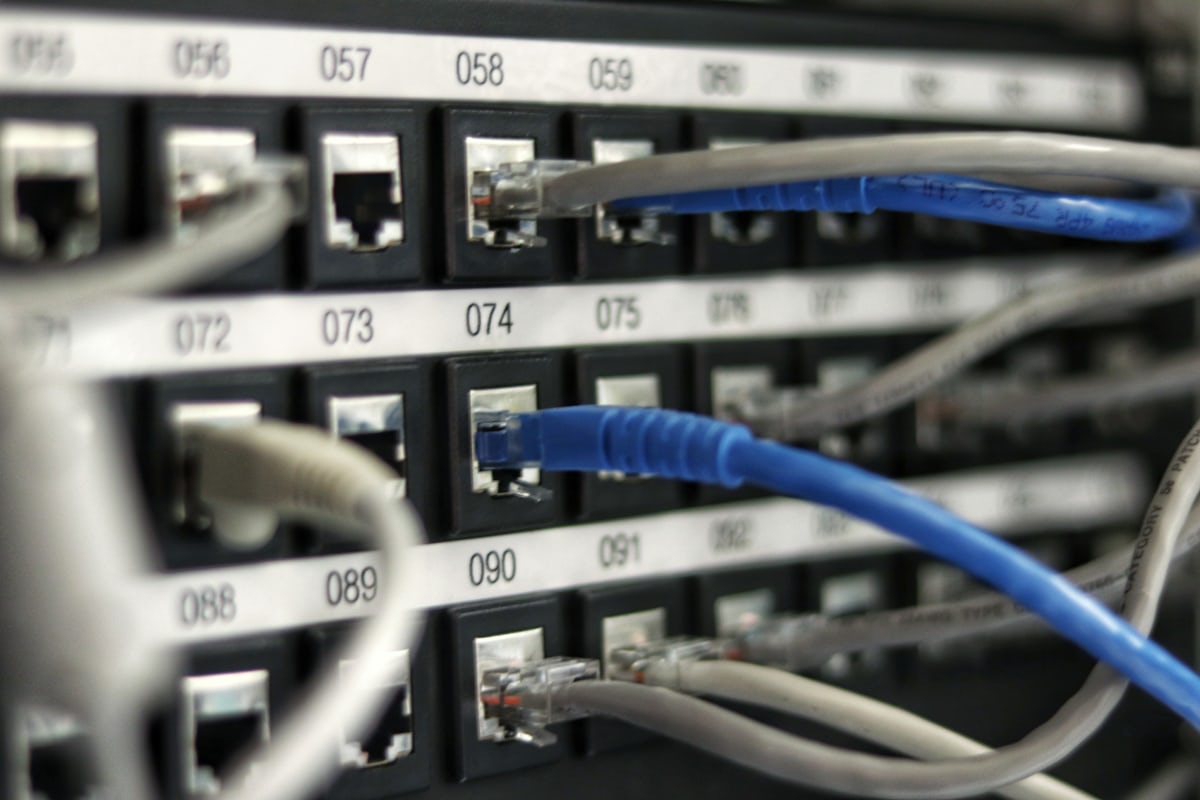
- The web server software behind your hosting plan quietly determines your site's speed ceiling.
- Here is what LiteSpeed, Apache and Nginx actually mean for Nepali website owners.
Most Nepali hosting buyers never ask what web server software runs their account — yet it is one of the biggest hidden factors in page speed, alongside storage type and server load. Three names dominate: Apache, Nginx and LiteSpeed.
Apache: The Long-Standing Default
Apache has powered the majority of the web for decades. It is flexible and .htaccess-friendly, which is why most cPanel hosting historically used it. Its downside is handling many simultaneous connections less efficiently than newer alternatives, which shows under real traffic load.
Nginx: Built for Efficiency
Nginx handles concurrent connections with a fundamentally more efficient architecture, making it the choice for high-traffic sites and often paired in front of Apache as a reverse proxy — serving static files directly while Apache handles dynamic requests.
LiteSpeed: The Modern cPanel Favorite
LiteSpeed is a drop-in Apache replacement built for speed, with native .htaccess compatibility (so existing sites work unchanged) plus built-in caching (LSCache) that significantly accelerates WordPress and other CMS sites without extra plugins. It has become the preferred choice among quality Nepali hosting providers upgrading their infrastructure in 2026.
Practical Impact for Your Website
| Server | Best for | Typical speed impact |
|---|---|---|
| Apache | Legacy compatibility, low traffic | Baseline |
| Nginx | High-traffic, static content | Faster under load |
| LiteSpeed | WordPress, cPanel sites | Fastest with LSCache |
How to Check What Your Host Uses
Ask your provider directly, or check response headers via browser developer tools (Network tab, look at the "Server" header). If you are on WordPress and your host offers LSCache, installing the free LiteSpeed Cache plugin is one of the highest-impact, zero-cost speed improvements available.
Why LSCache Specifically Beats a Generic Caching Plugin
A standard WordPress caching plugin builds and stores cached pages at the PHP application layer — still requiring PHP to boot and check whether a cached version exists before serving it. LSCache operates at the web server layer itself: LiteSpeed can serve a cached page without invoking PHP at all for that request, which is a meaningfully faster path, especially under concurrent load where every avoided PHP process directly reduces CPU and entry-process consumption. This is the specific mechanism behind LiteSpeed's reputation for faster WordPress performance, not just marketing language — it changes which layer of the stack actually answers a cached request.
OpenLiteSpeed vs Commercial LiteSpeed: A Distinction Worth Knowing
LiteSpeed actually ships in two different forms, and providers do not always specify which one backs their hosting, which matters for what you actually get. OpenLiteSpeed is the free, open-source edition — a genuinely capable web server, but without the full LSCache caching engine's most advanced features and without the enterprise-grade licensing that includes vendor support. The commercial LiteSpeed Web Server Enterprise edition, which reputable cPanel hosts typically license per-server, includes the complete LSCache feature set, active vendor support, and the specific performance optimizations most commonly cited in LiteSpeed benchmarks. A host advertising "powered by LiteSpeed" without specifying which edition is not necessarily misleading, but a site owner particularly focused on maximum WordPress caching performance should ask directly which edition backs their account, since the free and commercial versions are not functionally identical despite sharing the LiteSpeed name and general architecture.
Frequently Asked Questions
Should I switch hosts just for LiteSpeed?
If your current host is genuinely slow and you are shopping anyway, LiteSpeed-based hosting is a meaningful factor to prefer — but hosting quality overall (hardware, network, support) matters more than server software alone.
Does LiteSpeed cost extra?
It has licensing costs for the hosting provider, but is typically bundled into plan pricing rather than charged separately to end users.
Can I run LSCache without LiteSpeed as the web server?
No — the LiteSpeed Cache plugin's server-level caching specifically requires the LiteSpeed web server underneath; on Apache or Nginx, a different (application-layer) caching plugin is the right choice instead.
Want fast, LiteSpeed-powered hosting? See our hosting plans or ask which server technology we use.